
Housing Element Update: 2026
Three Years In, Less Than 10% Complete: Marin Falls Further Behind
Every 8 years, each California county, city and town must update its Housing Element to assure that it enables development of sufficient new housing to satisfy requirements assigned to it by a regional agency. These requirements are known as Regional Housing Needs Allocations or “RHNAs.” Marin’s sixth 8-year Housing Element Cycle, during which as a whole it must permit 14,404 new housing units, officially kicked off January 31, 2023.
Each April, all counties, cities and towns must publish an Annual Progress Report (APR) documenting their progress toward achieving their respective RHNA goals for the Cycle.
Limited projects + slow approvals + delays = few permits
We are 3 years into our current Housing Element Cycle—almost 40%—and we’ve barely started. We haven’t even reached 10% of our RHNA goals. Most jurisdictions have not received adequate housing proposals and the few proposals they have received are moving very slowly through the approval process. And, so far, most permits have been for accessory dwelling units (ADUs), which we support, but they are housing units built one-at-a-time, which isn’t much help toward meeting our goals.
Only San Rafael and Novato have approved housing on a meaningful scale. Even there, projects are struggling to move from approval to construction. Many approved developments are delayed in securing building permits, with some unlikely to proceed at all and others being reduced in scope.
This matters because the state only credits jurisdictions for housing that has received building permits—not for proposals or approvals alone. Ultimately, plans and pipelines don’t address the housing crisis—homes must actually be built.
| Housing Element progress |
 NOTES: Does not include ADUs or individual single-family homes. Includes all currently approved units, including units approved last housing cycle and phase 2 of the Northgate Mall project. |
Meeting our housing goals is critical for our communities
At the most basic level, Marin needs more housing. Until we actually build it, tenants and workers will continue to be pushed out, and local businesses and schools will struggle to hire and retain staff and teachers. At the same time, the state is steadily increasing pressure on jurisdictions that fall short–through stricter streamlining laws, further loss of local control over height and density requirements, loss of eligibility for key funding sources, and potential financial penalties.
Marin’s high costs and physical constraints are real, but they are not insurmountable. There is broad agreement that more can be done. At Call Marin Home’s first coalition meeting in January—bringing together leaders from the business community, affordable and market-rate developers, social and legal services, planners, and architects—participants shared a clear consensus: we can do this, but it will require increased funding and a more efficient, streamlined approval process.
Marin needs more funding for affordable housing
Several proposed affordable housing projects in Marin are currently struggling to secure financing. Most affordable housing funding comes from state and federal programs, and given the current political climate, significant increases in those programs are unlikely. These programs are also highly competitive—qualified projects must compete for limited funds, and many do not receive awards. A $10 billion state housing bond is slated for the November 2026 ballot. If passed it would be helpful, but would fall far short of what’s needed.
A new regional measure from Bay Area Housing Finance Authority (BAHFA) will likely emerge in 2028, but there is growing consensus among local stakeholders that Marin needs its own dedicated funding source. Many jurisdictions across California have already taken this step. San Mateo County dedicates a portion of its sales tax to affordable housing, Sacramento has issued housing bonds, and Emeryville has implemented a parcel tax. Local funding not only fills critical gaps but also makes projects more competitive for state and federal dollars—helping to attract affordable housing developers and accelerate production.
Marin needs further streamlining of projects
Despite a wave of new state housing laws, getting projects approved and built in Marin remains an exceptionally slow process. The recently opened Aegis Senior housing project in Marin was first discussed by the San Rafael planning commission more than a decade ago. The Seminary at Strawberry project also has been in discussions for over 10 years. The Northgate Town Square project is now in its fifth year of planning.
Even small projects are hard, here. The 20-unit Magnolia Village project in Larkspur is also in its fifth year, and is just breaking ground. Of the 56 projects that have been proposed or approved in Marin, 45 have already been in process for more than a year.
Every year of delay adds roughly 15% to costs due to inflation, land carrying costs, professional fees for redesign and resubmittal work, and changing building codes. While financing challenges play a role, there is widespread agreement that local policies and processes are a significant contributor to these delays.
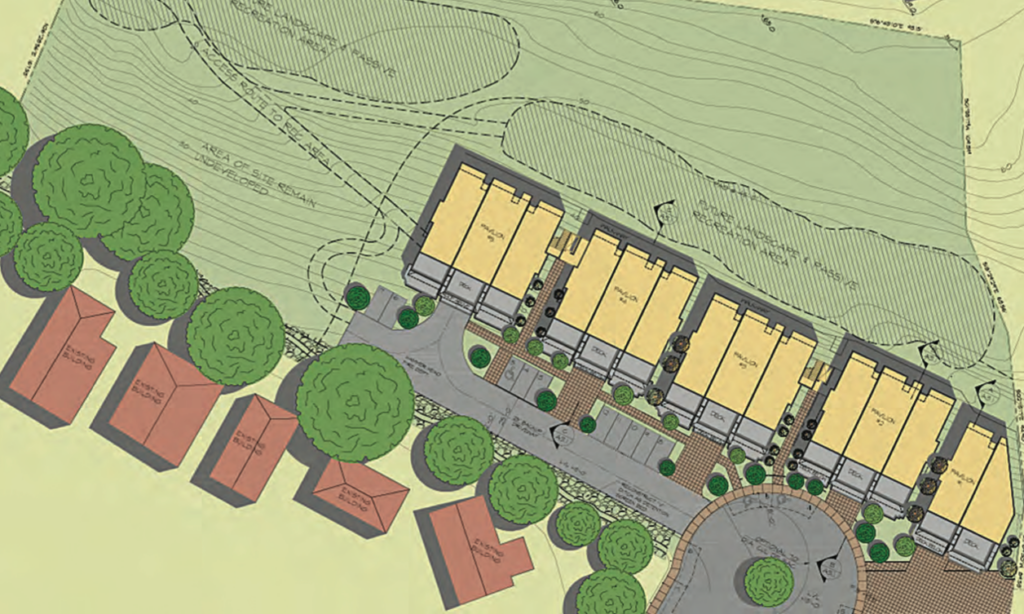
Infill development sketch from Accelerating Infill in Marin County: Solutions to Increase Housing Opportunities (Report), page 13
Marin has real opportunities to improve. Jurisdictions can streamline approvals by clarifying processes, consolidating review checkpoints, reducing fees, and limiting requirements that are not tied to health and safety. Standards should prioritize cost-effectiveness over purely aesthetic considerations. For example, requiring parking behind buildings adds substantial costs without delivering functional benefits, and is not common in Marin. This standard was included in the County’s Objective Design and Development Standards (ODDS) for projects eligible for ministerial review.
The limited number of project proposals also suggests that recent rezonings under our various Housing Elements were not sufficient. More jurisdictions should follow the example of San Rafael by pursuing broader, neighborhood-scale rezonings, rather than relying on incremental, parcel-by-parcel changes.
Other jurisdictions across California have adopted a range of proven strategies to improve project feasibility and shorten timelines. Marin does not need to start from scratch—it can learn from these examples. Call Marin Home is planning a panel on “Lessons Learned from Outside” to highlight best practices from other regions. The takeaway is clear:if Marin wants different results, it will need to make meaningful changes to the way housing gets approved and built.
What can we do now?
Housing is the #1 issue Marin residents want local government to address—and decisions are being made right now that will shape whether we succeed or fall further behind. Elected officials and staff consistently hear from those opposed to new housing; they need to hear just as clearly and just as often from people who support building more homes.
Our weekly Coming Up email (sign up here) and website highlight key meetings and provide simple, effective talking points so you can show up and make an impact. The difference between delay and progress often comes down to who participates.
Join us—and help ensure that strong, consistent pro-housing voices are not just present, but impossible to ignore.
Upcoming Events
The State of Housing in Marin: Challenges, Solutions, and What Comes Next
Jenny Silva, Executive Director of Call Marin Home, will make a presentation at the next Marin Coalition meeting. All are invited to attend.
Thursday, May 7, 2026
Program 1:30 – 3:00pm (Check-in 1:00-1:30pm)
Marin Rod & Gun Club, 2675 Francisco Blvd East, San Rafael
Cost: $12/person or $18 for two ($15 at the door)
Refreshments: No-host food and beverages are available
Registration available soon https://marincoalition.org/next-event/
Build housing faster: Streamlining options in Marin
Call Marin Home webinar. Join us to hear about streamlining options in Marin.
Thursday, May 21 at 11:00 am – 12:00 pm
To better understand what’s happening, we’re bringing together a panel of experts from development, law, and local government to share their perspectives and discuss what could improve. Panelists include: Riley Hurd – Land Use Attorney, Justin Derby – Vice President, Northern California Division, Meritage Homes, and Matt Hertel – Assistant Director of Community Development, City of Sacramento. Register here.
Resources
Infill Developers Report
ACCELERATING INFILL IN MARIN COUNTY: SOLUTIONS TO INCREASE HOUSING OPPORTUNITIES, October 2025
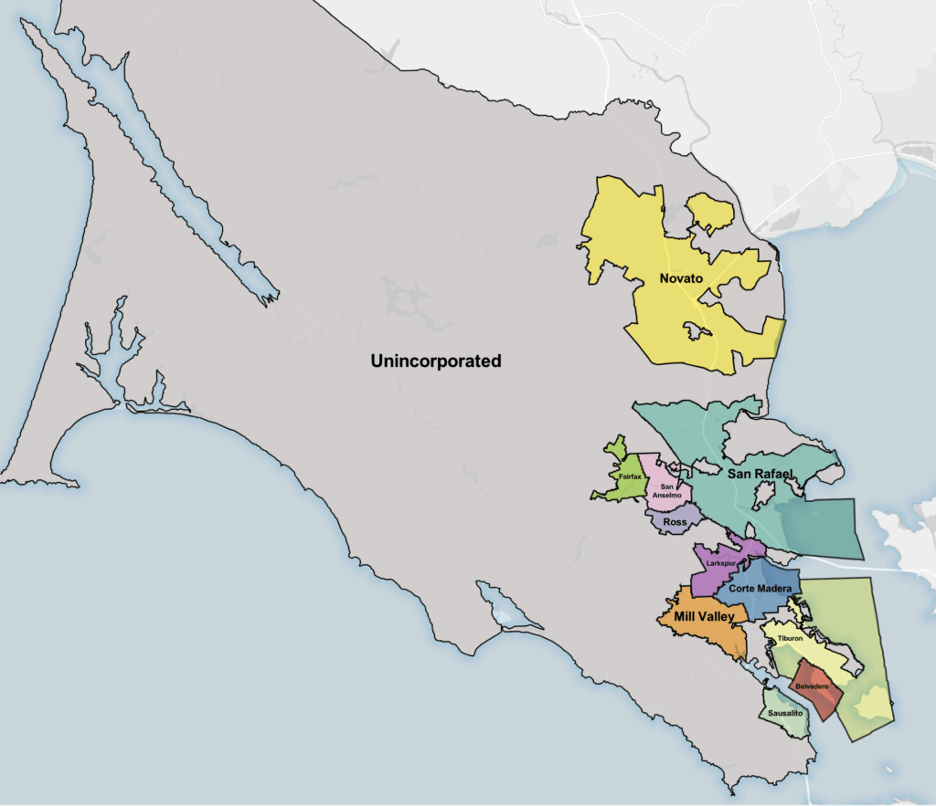
Jurisdiction Annual Progress Reports (APRs) are available below. (Belvedere, Mill Valley, Fairfax and Sausalito have not yet published their APRs as of April 1, 2026. No multi-family projects were permitted in these jurisdictions in 2025.)
We are a broad and strong coalition
Call Marin Home is a collaborative partnership of leading Marin County organizations working to create systemic change that expands access to affordable, workforce, and accessible housing in order to ensure that everyone in Marin has a place to call home. The coalition continues to grow. Interested in joining? Email Jenny. View our current membership here >>.
| Our donors and sponsors make our work possibleYour advocacy and support have helped us do more, reach a broader audience, and get results. Every contribution, big or small, makes a meaningful difference and helps us continue and expand our mission. You can donate here. Thank you to our funders, donors, and community partners for supporting our work. | Donate now | ||||||||||