Environmental Impacts
Affordable housing is the smart climate choice
Marin cannot seriously tackle climate impacts and reduce emissions without addressing our dependence on cars.
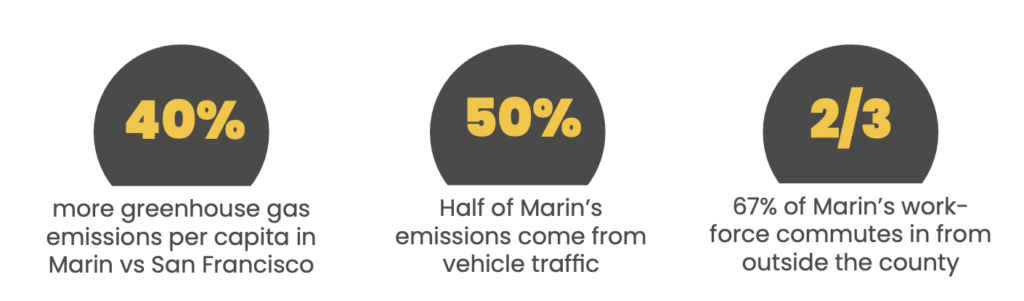
Marin exports sprawl and causes long commutes.
While we’ve protected our extraordinary open spaces, our low-density development pattern has come at a price. Sprawl increases driving, reduces walkability, and prevents more energy-efficient housing from being built. Marin’s lack of affordable housing has pushed the workforce out of the county — and pushed growth farther and farther outward into Santa Rosa and the East Bay, consuming more undeveloped land.
Affordable housing is needed to address sea level rise.
The Canal District, one of Marin’s most diverse neighborhoods, is also its most vulnerable to sea level rise. Many homes and essential infrastructure sit in low-lying areas that flood during storm surges and King Tides. Parts of the neighborhood face chronic flooding, and displacement risk is real. More affordable housing is needed to give these residents housing options.
Affordable housing reduces greenhouse gas emmissions
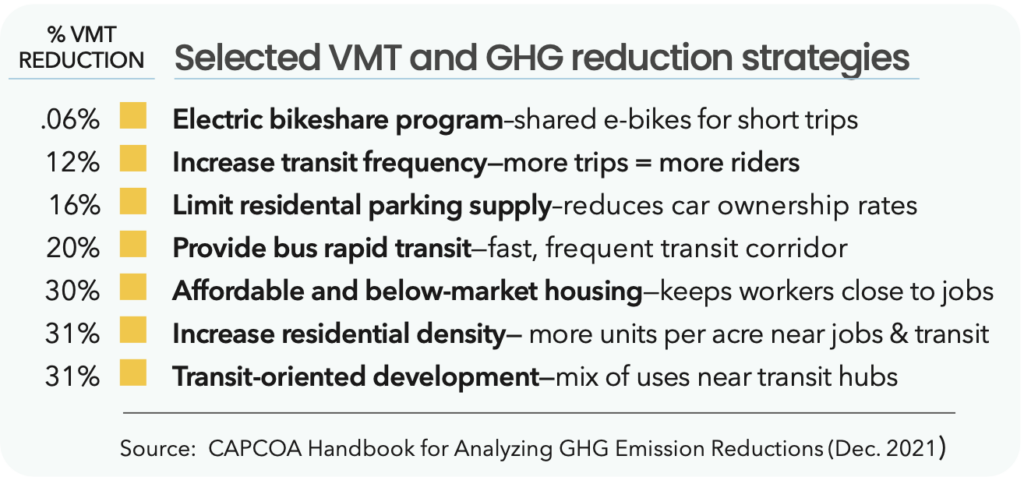
State law requires mitigation of Vehicle Miles Traveled (VMT) in new development projects. The most effective strategies include building affordable housing and increasing density. We can meet housing needs without encroaching on preserved land; increasing density will help conserve more land in the long run. Building where people work reduces emissions. Density makes transit viable. Housing near jobs means fewer cars on the road.