
Novato Shows Marin How It’s Done
Written by Lucie Hollingsworth, Director of Policy, Legal Aid of Marin
Nearly a year after a dozen households — more than 40 residents, including 17 children — were unceremoniously displaced from the condemned Romar Court Apartments, the Novato City Council took rare proactive action. On April 28, 2026, the Council adopted a strengthened just cause tenant protection ordinance that protects tenants from displacement and, at the same time, incentivizes the preservation of an aging housing stock.
Let’s take a moment to appreciate how this happened, because the how matters as much as the what.
A Win Built on Lived Experience
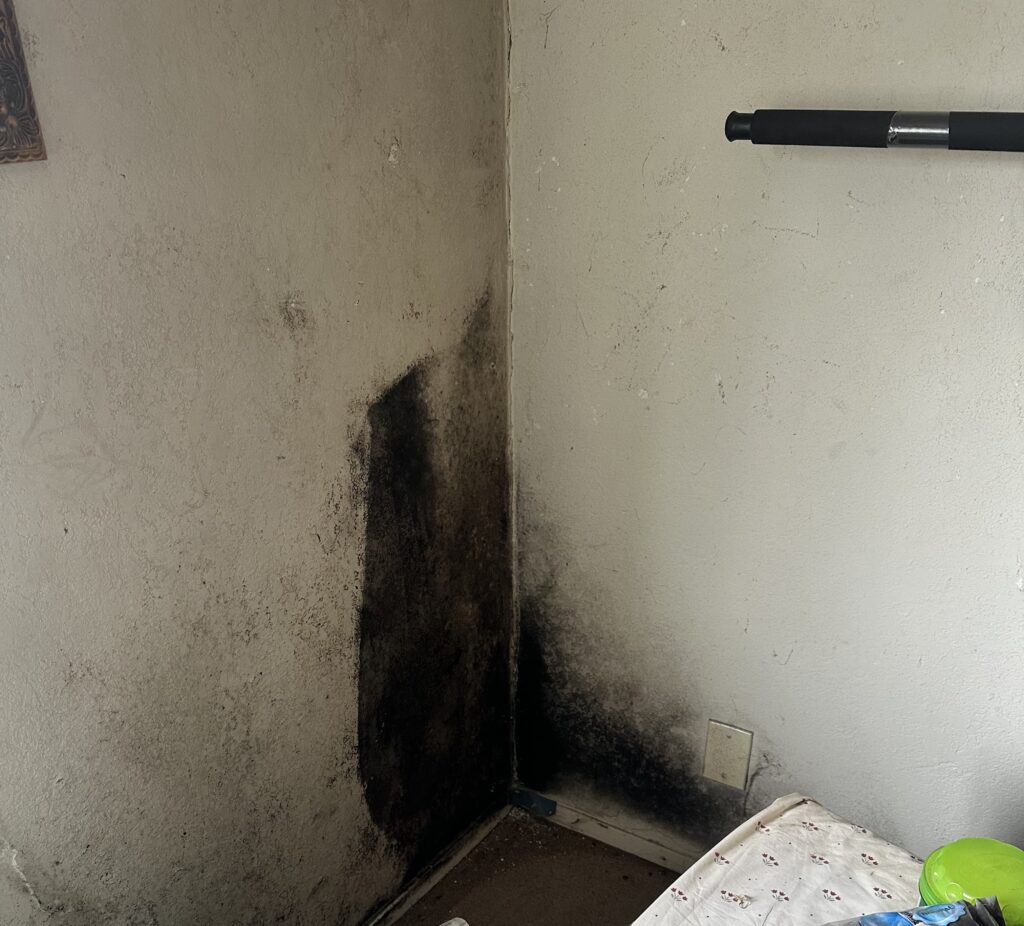
The Romar Court story is not a hypothetical. The building had mold, decades-old carpeting, cockroaches, rats, cracks in the walls, and exposed plumbing and electrical wiring. For years, the two-story, 16-unit building balanced precariously on 2 x 4s and car jacks. Tenants paying on average $3,000 per month were told to “move if you don’t like it” when they complained. When the city finally red-tagged it for structural and fire safety hazards, the landlord (owner of over 7,000 units throughout California) didn’t even provide the legally required relocation assistance.
The City of Novato had to step in, ultimately providing each displaced household over $7,000 – two months of fair-market rent and utility costs- with critical support from local nonprofits who continue to walk alongside these families. Despite the coordinated support, tenants lost most of their belongings and still struggle to find stable housing one year later.
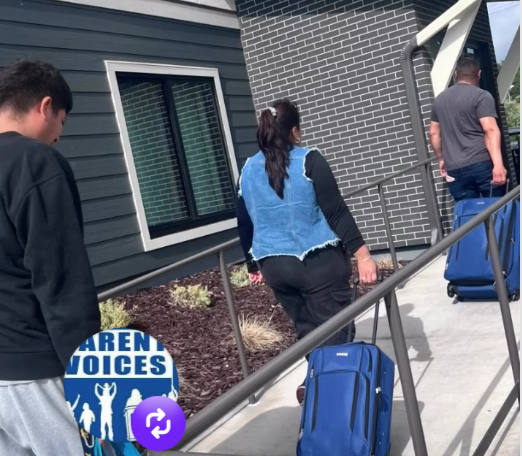
From that crisis, advocates witnessed first-hand where our laws fall short. Organizations, including Legal Aid of Marin, Community Action Marin, North Marin Community Services, Canal Alliance, and Parent Voices Marin, pushed the city to go beyond state laws that, in a housing crisis, unintentionally serve to accelerate displacement and incentivize deferred maintenance. And rather than treating tenant advocates as agitators, the city listened.
The new ordinance builds on California’s 2019 Tenant Protection Act but adds local provisions tailored to today’s reality. It strengthens protections for renters facing no-fault evictions – especially when buildings are red-tagged or require substantial renovations – clarifies the categories of at-fault and no-fault evictions to prevent arbitrary or retaliatory displacement, and establishes higher relocation assistance standards, including a right to return once repairs are completed.
As Councilmember Tim O’Connor took pains to clarify, this is not rent control. It is, simply, a policy that says: landlords can’t make life chaotic and precarious for tenants in good standing without consequences. That’s a reasonable, human ask.
The Difference a Little Civility Makes
Now, before we get too high-minded, let’s acknowledge the obvious: this is a controversial topic. Tenant protections always are. Ask anyone who has followed the ongoing saga in Fairfax, where a similar push for renter protections in 2022 and 2023 devolved into a multi-year political war that continues today. The landlord opposition gathered signatures to repeal the protections, put measures on the ballot, and generally turned what should have been a productive civic conversation into something that felt more like a reality television franchise. (Season 3 is still filming.)
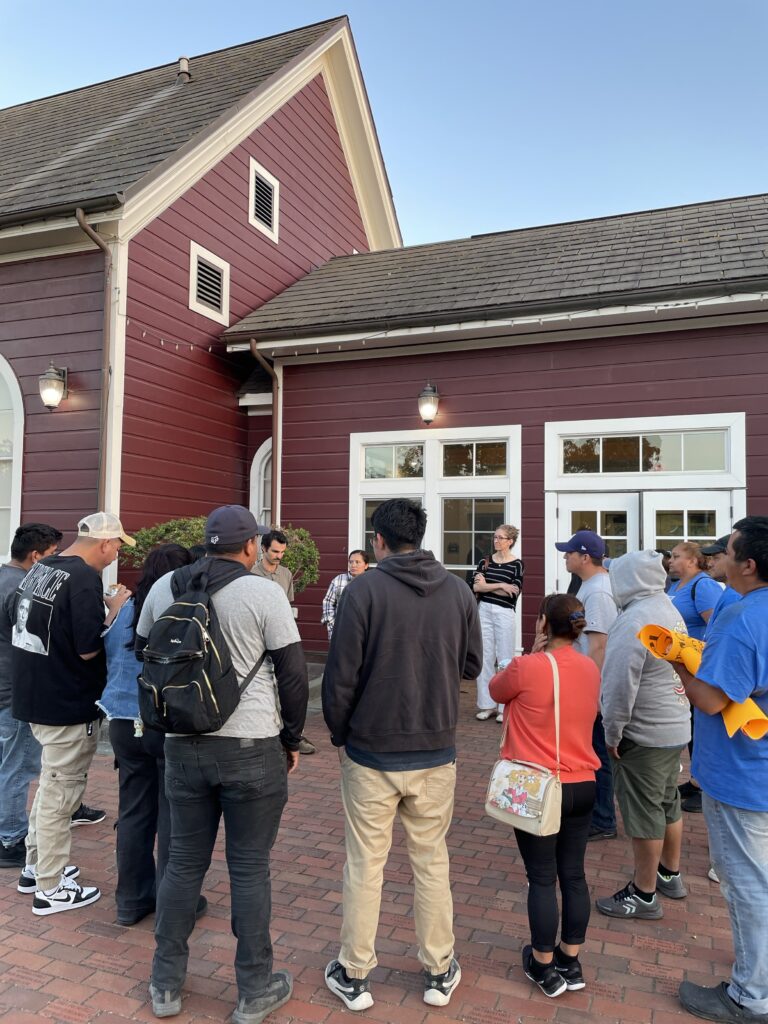
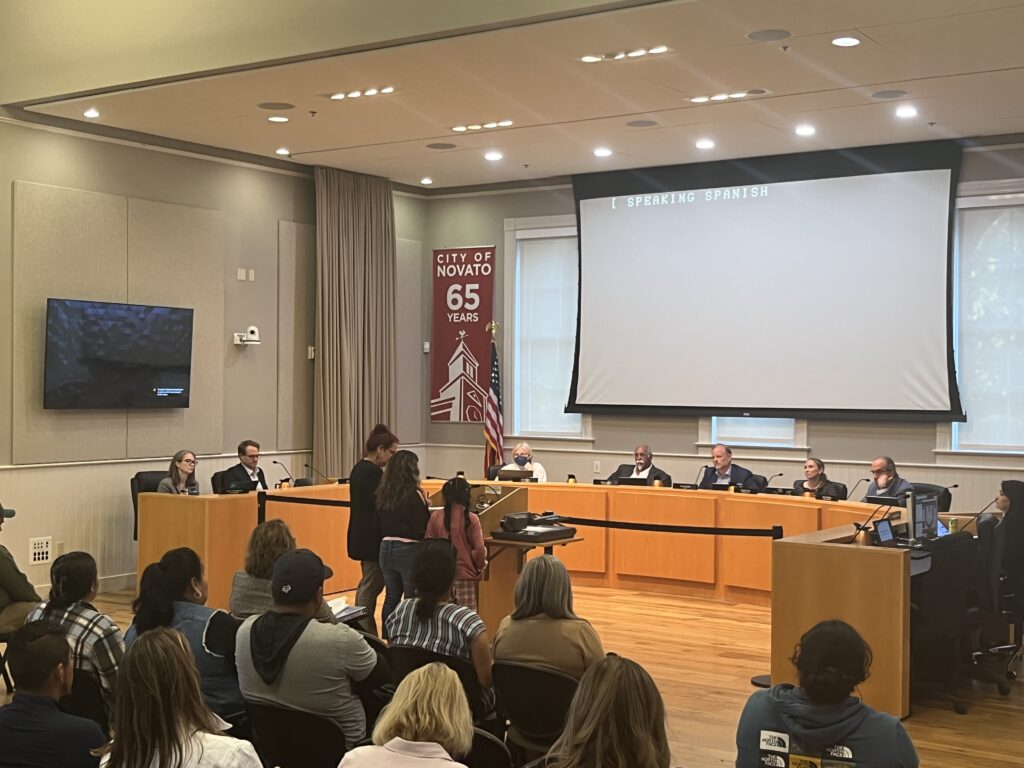
Novato’s process was not without its own drama – two council members had to recuse themselves because they owned rental properties, leaving a slimmed-down trio to wrestle with thorny details like small-operator exemptions and the precise calculation of relocation payments. The public meeting at which the protections were agendized was preceded by a tenant rights rally outside City Hall, where the displaced tenants and their children endured (and ignored) expletive-filled heckling from one solitary individual. Public comments were spirited, but mostly measured, from both sides of the issue
The City of Novato managed to do something Marin doesn’t always manage: hold a difficult conversation without letting it become a circus. Staff presented the ordinance as part of the city’s broader Housing Element strategy: production, preservation, and protection. The framework was clear. The goal was explicit. And the outcome, while still just a first step, reflects a city trying to get ahead of displacement and neglected housing stock rather than manage its aftermath.
As Charlotte Gonnella from North Marin Community Services put it: “Nonprofits can’t solve housing crises.” That’s the kind of clarity that makes good policy. When families are displaced, the ripple effects hit schools, local businesses, healthcare systems, and the social fabric of a community. Our under-resourced non-profits and low-income residents should not be solely responsible to fill the gaps left by inadequate laws. Novato, as a community, decided it would rather prevent the wave than mop up the flood.
The Tenants Who Made It Happen
None of this happened without the people who had the courage to show up. The tenants who, led by Parent Voices Marin, spent a year engaging with electeds and city staff despite their lives being upended. The nonprofit staff who worked overtime to support Romar Court families with rental assistance and case management. Community members that showed up en force for housing justice. The council members who read their emails and made themselves available for meeting requests (and, yes, there were a lot of them) – and didn’t flinch. And let’s not forget the Novato property owners and real estate agents that took the time to read and, most importantly, understand what was being proposed, engaged in thoughtful discussions, and respected the decision.
This is a community working toward a Marin that is not just for the very wealthy. Teachers, healthcare workers, maintenance workers, service workers – the people who make our communities function — deserve to live in the cities they serve. Marin County ranks as one of the most expensive rental markets in the country, and ordinances like this one are not going to fix that on their own. But they’re one piece of the puzzle, and today, Novato has it.
The push for an equitable and inclusive Marin is far from over, but Novato showed what’s possible. And it got done without setting anything on fire. Take note, Marin. Aging housing stock and the displacement it leads to is not unique to Novato — it exists throughout our county. Marin’s other cities and towns shouldn’t fear following Novato’s lead.
| PUBLIC PRESENTATION Housing in Marin: Affordability, Development, and What We Can Do Call Marin Home presentation to Marin Coalition June 11, 1:30 pm, Marin Rod & Gun Club |
 Housing affordability consistently ranks as the top issue Marin residents want local governments to address. Yet the conversation is often complex and sometimes confusing. What exactly is “affordable housing”? Who qualifies? How much is needed? And how can communities thoughtfully balance new housing with concerns about traffic, infrastructure, neighborhood character, and environmental impacts? Jenny Silva, Executive Director of Call Marin Home, will provide a clear and practical overview of what “affordable housing” means, who it serves, and how projects move from proposal to construction. She will share recent data and trends on housing development across Marin, explain the region’s housing needs, and outline the key challenges facing local jurisdictions.The program is open to the public. For more info and to reserve your seat, click here. The Marin Coalition presents a series of monthly speaker programs which offer opportunities to listen to, and present questions to, the speakers on various topics of interest confronting Marin County and the Bay Area. Housing affordability consistently ranks as the top issue Marin residents want local governments to address. Yet the conversation is often complex and sometimes confusing. What exactly is “affordable housing”? Who qualifies? How much is needed? And how can communities thoughtfully balance new housing with concerns about traffic, infrastructure, neighborhood character, and environmental impacts? Jenny Silva, Executive Director of Call Marin Home, will provide a clear and practical overview of what “affordable housing” means, who it serves, and how projects move from proposal to construction. She will share recent data and trends on housing development across Marin, explain the region’s housing needs, and outline the key challenges facing local jurisdictions.The program is open to the public. For more info and to reserve your seat, click here. The Marin Coalition presents a series of monthly speaker programs which offer opportunities to listen to, and present questions to, the speakers on various topics of interest confronting Marin County and the Bay Area. |
| Reserve your seat |
RESOURCES
ABC7 NEWS (video) Novato families forced to leave home after ‘unsafe’ apartment building red tagged by city.
PARENT VOICES(video: reels) This happened at Romar Court
DISPLACEMENT
Rooted in Marin is a community-centered engagement and education process to understand displacement in Marin County.
Displacement is an urgent and critical issue in Marin County.
PROJECTS Call Marin Home tracks projects and the Marin housing pipeline on our website: https://callmarinhome.org/projects/
POLICY Call Marin Home uses the 3 Ps of affordable housing framework to guide its policy advocacy: production of new housing, preservation of existing affordable housing and tenant protections.
Join our coalition
Call Marin Home is a collaborative partnership of leading Marin County organizations working to create systemic change that expands access to affordable, workforce, and accessible housing in order to ensure that everyone in Marin has a place to call home. The coalition continues to grow. Interested in joining? Email Jenny. View our current membership here >>.
| Our donors and sponsors make our work possible.Donate now |
| Your advocacy and support have helped us do more, reach a broader audience, and get results. Every contribution, big or small, makes a meaningful difference and helps us continue and expand our mission. You can donate here. Thank you to our funders, donors, and community partners for supporting our work. |
 . .     Call Marin Home is a 501(c)3 86-2659273 charity |